Land Thieves

As the University of Texas takes on the University of Oklahoma, I thought it prudent to point what exactly a “Sooner” is.

Sooner is the name first applied about six months after the Land Run of 1889 to people who entered the Oklahoma District (Unassigned Lands) before the designated time. The term derived from a section in the Indian Appropriation Act of March 2, 1889, which became known as the “sooner clause.” It stated that no person should be permitted to enter upon and occupy the land before the time designated in the president’s opening proclamation and that anyone who violated the provision would be denied a right to the land.

Illegal claimants were initially called “moonshiners,” because they entered the area “by the light of the moon.” Sooners or moonshiners hid out in brush or ravines, then suddenly appeared to stake a claim after the run started, giving them clear advantage over law-abiding settlers who made the run from the borders.

If you didn’t feel like reading through all of that, I’ll sum it up in a word; Cheaters. How fitting then is it for the Oklahoma mascot to be a Sooner.

This is the one day a year I can happily say:

Hook ‘Em Horns!

A Sooner Cries...
A Sooner Cries...

Coming to an Airport Near You

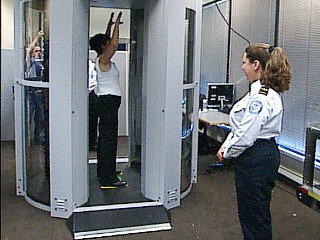
A few weekends ago I took a trip to Quito, Ecuador and was subjected to the displeasure of the newest addition to the TSA’s anti-terrorism toolbox; The full body scanner.


The full body scanners do exactly that, they scan the entire body, through the clothing to produce a near naked image for a TSA employee to ponder over before letting the traveler go about their business.

There is only one such scanner currently at IAH and it is in Terminal E.

On the day that I was flying, the traffic through Terminal E was light so everyone was being subjected to the full body scan. There was no signage anywhere explaining what the scanner was, people were just being directed into the device and told to “raise your hands in the air”.

Knowing what the machine was and what job it performed, I let the agent know that I would “opt-out” and preferred the personal screening. I assumed that this would be done like it has always been done, behind a screen out of the public eye. Nope, not this time. The pat-down was more thorough than a doctor during a physical and was performed right out in the open in front of everyone walking by.

This is unacceptable, plain and simple. It was quite obvious that they were trying to test the machine during a lull in the crowd and were using the pat down as an embarrassment tool to persuade me into going through the machine next time.

We are sacrificing our freedoms in the name of security and it’s irresponsible.

Next time, I’ll just go through Terminal C and avoid the unwanted feel-up by the TSA.

Someone Donate a Dictionary to NBC

Apparently the economy has hurt the folks at NBC so much that they cannot afford a dictionary. Or maybe their time is too valuable to actually look up a definition before speaking complete fallacies.

During a report on the recent ACORN scandal Norah O’Donnell of NBC News stated that the sting videos “might be viewed as entrapment”.

No, Norah, it can’t be because as the definition states, entrapment is when a law enforcement officer or government agent induces or encourages a person to commit a crime when that person expresses that they do not want to do so. Entrapment is based on who caused the encouragement for the act.

In these ACORN tapes it is clear that the encouragement was not by the “government agents” but instead with the ACORN volunteers.

What makes this wordplay even funnier is that NBC is also the producing network of the entrapment trainwreck called To Catch a Predator. There have been numerous claims of the show’s decoys being the first to suggest sex, meaning that a show acting in conjunction with the government crossed into the fuzzy area of entrapment.

[flash flashvars=”v=GdkUpruzSU”]http://www.eyeblast.tv/public/eyeblast.swf[/flash]

Civility

Joe Wilson’s explosive comment during President Obama’s speech to the joint session of Congress was inappropriate. He apologized, end of story. Right? Wrong.

His two words have caused an uproar on the internet, the television and the radio, diverting attention away from the real issue; Healthcare. One blogpost writes Wilson’s comments off as poor “civility” and claims such a virtue is not one at all:

Civility is one of our favorite fake virtues. Real virtues like kindness, charity, or honesty ask something of us—but civility is satisfied so long as we speak in a certain tone and refrain from using certain words. We might spread lies that lead to unnecessary war—but we do so politely. If we grind the faces of the poor into the dust—at least we do it with well-polished boots. We are a nation of wealth and taste.

Sure, it sounds like a decent argument on the surface, but the tactic here is to add language that again, distracts from the argument. Lies are lies are lies, no matter who spreads them. The disturbing part is the recent revelation that the two examples of where healthcare failed used by the President in his speech were embellished. Ok, so he didn’t tell the whole truth, but wait, that sounds familiar if you listen to the rhetoric on Bush’s Iraq policies.

It is just more proof that neither side is better than the other and they both have their share of crooks, liars, and whackjobs. Trying to claim moral high ground on the basis of political ideology is about as dumb as looking into a gas can with a lighter. Your politics may be shaped by your morals but loose blanket statements on issues doesn’t pass the muster test. If you believe in virtues, then you have to abide by all. It’s not some moral buffet where virtues can be cherry picked when they suit a purpose.

So maybe it’s time to forget civility and try kindness, humility, temperance, charity, patience, diligence, chastity, and justice. I’m sure that out of those eight civility will become a given.

Education and the Silent Trillion

Behind all of the healthcare debates and save-face moments lies another policy proposal that is quietly making its way through the House. The Obama administration is proposing to increase its current 20% share of the student-loan origination market to 80% by July 1, 2010 and letting the remaining public sector 20% just fade away.

For decades, federally backed student loans were the most common way to borrow for college. Money was raised in the private sector, loans made and the private institutions paid a fee to the government for each loan. In return, the government covered most of the defaults which in turn, allowed the private lenders to make a regulated return. All of that changed in 2007 when Congress legislated a return so low that no private lender could make a profit holding the assets.

The administration is claiming that this will save $87 billion but there are discrepancies that the Congressional Budget Office says really only mean $47 billion in savings. Long story short, be prepared for the default rates to skyrocket and for more students to suffer as they come out of college and realize missing a single payment could cost them dearly.

Education for all! [that can afford it]

Aren’t There More Important Things in the World?

The protests against David Letterman in New York City make me a chuckle; Sure what he said about Palin’s daughter and A-Rod was in poor taste, but to take time out of your day to go yell at the building where he works seems a bit over the top, don’t you think? Even funnier are the protesters protesting the protest, of course they turn it into a political opportunity rather than a look at what was said as being inappropriate.

Yet, halfway around the world people are protesting and dying for change in their country. Seems like our priorities are out of whack. We’re worried about whether restaurants should be serving trans fats while Iranians are being told they are not allowed to gather in public places. Let’s get our priorities in order and worry about the things that matter, which, I’m sorry to say, do not include what talking heads say on television.

D-Day – 65 Years Later

Today marks the anniversary of the turning point on the Western Front during WWII. Some will say that the battles in North Africa marked the turning point and others will reply with mentions of Sicily and Salerno, but the truth of the matter is, the events that took place on June 6, 1944, from the beachheads to the hedgerows, changed the course of the war to a direction from which the Axis powers could not recover.

Watching the ceremonies that took place today in France made my eyes water. I saw war veterans being stopped in the street and asked for their autographs, being treated like royalty, and being thanked. The news station interviewed some of them and their humbleness was unbelievable, most explained that they were just doing their part and that the ones who deserve our thanks are the ones who did not come back. Those who paid the ultimate price do deserve our gratitude, but the ones who lived through the war deserve to know that their  hard work is not unnoticed and was not in vain.

The generation that stormed the beaches that morning is slowly dying, we need to thank them and take as much time as we can to know their stories.

June 6, 1944 changed history. Americans, British, Canadians, French, and Australians stormed the beaches of Normandy and parachuted into places like Merville and Ranville. They fought for every inch of beach and in doing so, started a chain reaction to overthrow the evil that had infected Europe.

Cybersecurity Bill Too Vague?

In most American households the internet has quickly become the source of news, information, and in some cases, communication. So, the bill introduced by John Rockefeller, a West Virginia Democrat and Republican Olympia Snowe from Maine is surprising because it gives the ultimate authority over the U.S. internet infrastructure to the President, allowing him to turn off access if need be. There is certainly a need for control when a virus or DDoS attack threatens government systems but the vague language of the bill appears to give more control than necessary.

The purpose of a Denial of Service attack is to take a website down by overwhelming it with [fake] traffic. If the government’s intent is to prevent such take downs by simply unplugging the website, then they are fulfilling the goal of the attack, even if it is by proxy. Sure, there are other reasons to take a site or portion of the internet down, as in the case of viruses being programmed to steal important data off of government machines, but the take down should be limited in scope. By painting with a wide brush the writer’s of this bill have given too much power to a single person, rather than focusing on addressing threats, it lays out triage techniques to combat the issue.

There is more in the bill as well, including starting a scholarship program for Federal IT workers. You can read the bill in its entirety below.

0402 Rockefeller Cyber Security Bill