The Birds (A Travel Story)

A cool, crisp morning in Peru’s capital. I am up early after a late arrival from Houston the previous night. My goals start with the immediate future, find coffee, find food, and get my bearings in the nearby neighborhood. Little did I know, by the end of the day I’d be accosted by winged creatures while minding my own business.

The hotel I am staying in during this trip is the Sheraton Hotel and Conference Center, located pretty much smack dab in the center of Lima. The front desk suggested a cab to the historic center but after looking at a map over breakfast I opt to walk.

The fog has not burned off yet, making Lima feel a lot like San Francisco. The streets and sidewalks are alive. There are vendors selling the day’s paper, fresh squeezed orange juice, slices of pineapple or watermelon, and pastries. Oh the pastries. I can’t help but stop and grab a few of the items, one of which is a ring covered in cinnamon. Sure, I had already had breakfast, but how do you say no to a little sweet treat in the morning?

I continue walking northeast and reach Plaza de Armas where a large crowd has gathered to watch that day’s World Cup matches. Knowing I will want to explore this square and the surrounding area more, I decide to continue my journey northeast and end up at Iglesia de San Francisco. It’s a small church/convent and I am sad to learn that there are services going on all day and access to the interior is not allowed.

What catches my eye is the number of people gathered around the church. Not tourists, locals. They are enjoying the nice day as the fog finally starts to lift. What I did not notice was the massive amount of pigeons that had realized free food was a very real possibility in the immediate area. I lift my camera to take a picture of the church. As I am pushing the shutter release something jumps in front of me. I lower the camera to try and figure out what is going on and see every single pigeon headed toward me.
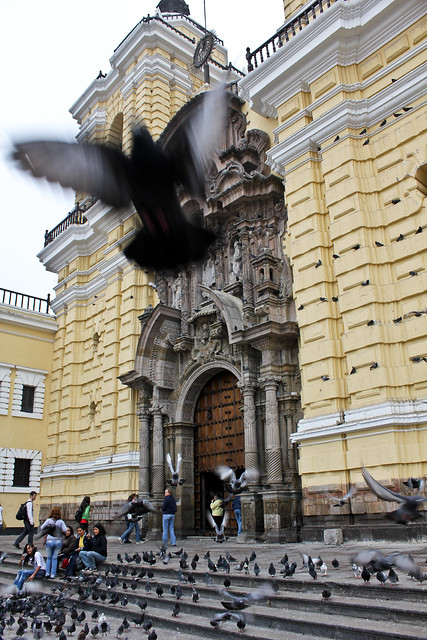
The Pigeons Always Win

It is over as quick as it started. The pigeons realize they are not getting any food from me. All except one. He continues to swoop down on me, following me away from the church and down the street for a block. To this day, I think that one particular pigeon is the one that incited the other pigeons to bring their winged vengeance upon me.
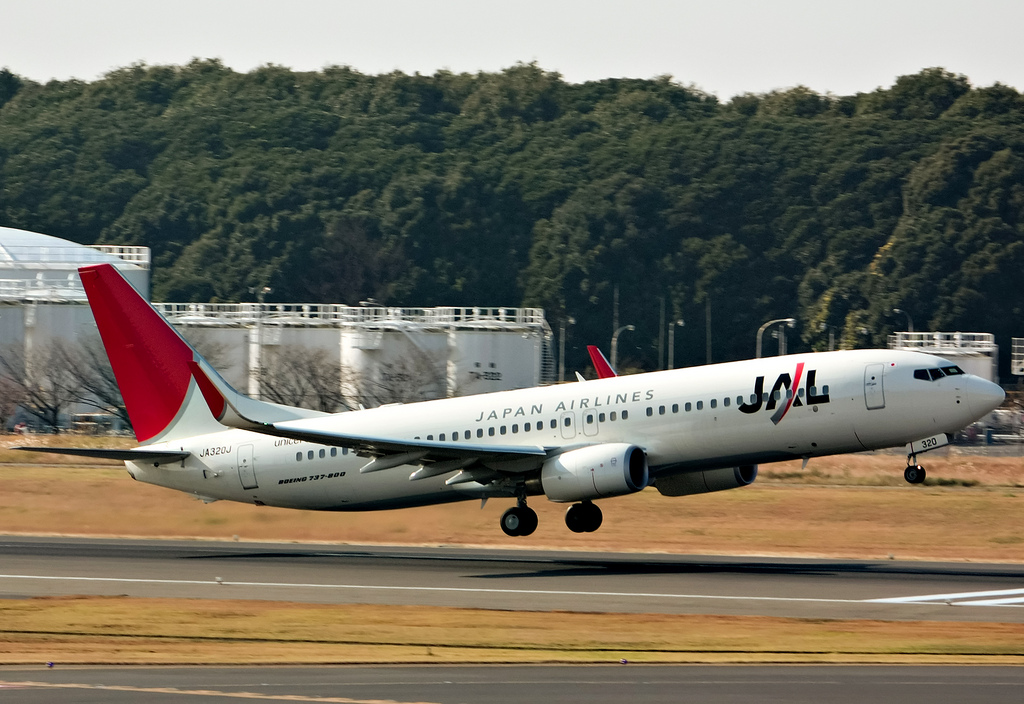
Is the Boeing 737 Safe? Or is this Scaremongering?

Is Boeing’s 737 an Airplane Prone to Problems?

Clive Irving on skin cracking on Boeing 737s:

For decades, Boeing had had that market to itself. Then, in the late 1980s, Airbus introduced a competitor, the A320, loaded with the latest technology; Boeing seriously underestimated the European upstart—until itrealized that it could lose a world market that it had created and monopolized. The result was the NG series, which arrived in 1997 and was a huge improvement on the old Classics. The NG had new wings, engines, and avionics systems to match the Airbus. But, surprisingly, the original fuselage was retained, albeit with some refinements.

It is an interesting posit by Mr. Irving but in the entire article he fails to lay out why the Airbus A320 is supposedly so much safer. While the A320 has not been involved in any decompression incidents it has been involved in around twelve fatal accidents.

The other piece in all of this that does not really fit is Mr. Irving pointing out that hard landings have generated concerns about the bulkheads in the aircraft. Of course it should generate concerns. Any hard landing puts a lot of stress on an aircraft and that’s the reason most airlines put aircraft through extensive inspections after such incidents.

The whole article comes off as scaremongering masquerading as a investigative reporting. I fly Boeing 737s just about every week and I’m not going to change my booking habits to avoid them.

In-Flight Wi-Fi Usage Numbers Increase

To Tweet From 30,000 Feet: Picking Planes Wired for Wi-Fi

Scott McCartney on some interesting trends:

Airlines say Wi-Fi usage-the percentage of passengers paying for Internet access—is picking up, driven partly by the popularity of tablet computers and partly because more planes have the service. Currently about 8% of passengers use the service, up from 4% at the end of 2010, according to In-Stat, a research and consulting firm. That likely will reach 10% of passengers by the end of this year, In-Stat says.

In-Flight Wi-Fi usage growth is no surprise. We are addicted to being connected just about everywhere we are. Why should an airplane limit that addiction? My opinion on this is two-fold. Sure, it is great to get your e-mail, work on your website, post photographs, etc. while you’re in the air but as someone who travels for work, I relish being cut off from the outside world for a while.

Since United announced a push to install Wi-Fi on a number of their aircraft, I will see if my perception and opinion changes over the next year. I tried to use in-flight Wi-Fi on a trip from Seattle to Frankfurt on Lufthansa in December but it was inoperative the entire time. On a flight of that length, it would have been quite nice.

Hitchhiking In Germany

A delay. We’re sitting in the Bremen train station trying to figure out what is going. We have run down one set of stairs and up another to get to a new platform and now it looks like our train will actually leave from a completely different platform. Welcome to regional train travel to remote parts of Germany.

Originally, the goal was to make it to Bremerhaven, a port city on the northern coast of Germany west of Denmark, before 2pm. Why you ask, are we going to Bremerhaven? It is the city where my wife was born. Her parents were stationed there as Air Force personnel and we wanted to see the city, the barracks, and just visit a little bit of our family history.

Everyone is standing around a Deutsche Bahn employee. I try to listen with my minimal German skills and hear what is keeping us from making it to our destination. Sadly, it sounds like an accident on the tracks to Bremerhaven ended in a fatality. The official assures us that the train will leave in 15 minutes.

Sure enough, 15 minutes later and we are onboard a train and moving toward Bremerhaven. The train is packed with all of that day’s passengers to Bremerhaven being onboard. We stop at two or three stops and everything seems normal. At the last stop, in a town called Lunestedt, an announcement is made that this is the final stop and everyone must leave the train. What I had missed in the earlier discussion with the Deutsche Bahn official was that from Lunestedt all passengers would be required to take a bus the rest of the way to Bremerhaven.

The tiny train station in Lunestedt is overflowing with people, a light rain driving them to take cover under the shelter for the bicycles. It becomes clear that only one bus is in use to shuttle passengers to Bremerhaven and the roundtrip for the bus takes 30 minutes. There is no queue for the bus, when it shows up people just scramble for it.

I start asking around to see if anyone speaks English and happen upon a woman about our age. She explains that it is going to be a long wait but that her boyfriend is coming to pick her up, then taking pity on us, asks if we’d like a ride. Normally, I would hesitate, but she seems like a nice lady and the line for the bus is overwhelming.

Twenty minutes later and the woman’s boyfriend drives up. At first I do a double take, then a triple take. The car is a four dour sedan with a hatchback but there are three other people already in it, the boyfriend and his two friends. The hatchback area is stuffed full of luggage, clothes, and other small items. The boyfriend gets out of the car, kisses his girlfriend, then shakes my hand and takes our suitcase, shoving it on top of the stuff in the back of the car.

I look at my wife. I am sure she is trying to telepathically communicate her uncomfortable feeling but at this point, we’re committed. We stuff ourselves into the car and the music starts. No one in the car is talking, just listening to death metal as we drive through the northern German countryside. My brain was trying to do the math on how to escape should these good Samaritans turn out to have nefarious plans. It, my brain, came to the conclusion to push my wife out of the car then quickly follow.

Thirty minutes later and we’re arriving in Bremerhaven and the first real conversation with us is started. “Do you know where your hotel is?”. “What’s it called? Oh, we know that place”, and five minutes later, there’s the hotel. We get out and I am trying to figure out the proper thing to do. I pull out 30 Euros and hand it to the boyfriend, thank him for driving us and my wife and I breathe a sigh of relief.

Looking back at this experience a couple of years later, I wonder if I would do the same thing today. In one word, probably. We were desperate. Was it the right thing to do? Probably not. But we have a funny story to share with you and our kids. And last but not least, these were actually really nice people who went out of their way to help us, who would have otherwise been stranded in a small town in northern Germany.

TSA Leaves Metal Detector Unattended

A TSA checkpoint was left unattended in Sacramento

Officials told KCRA 3 that four of the individuals were ticketed passengers and one was an airport employee. According to TSA officials, “a walk-through metal detector was left unattended for less than one minute.”

And if that story was not enough, here’s a great write-up on why the TSA should go away, written by a former FBI agent.

A Glimpse From the Pilot’s Seat

I love airline/airplane videos so when I came across these HD videos on NYC Aviation I couldn’t help but re-post them here. Both videos are great because they give a glimpse into an area that passengers rarely see. We take for granted that there is a workload being handled by the pilots behind that cockpit door.

In the videos you see how turbulence effects landings, other traffic in the area while cruising (notice the A380 in the one video?), and how the autopilot is adjusted during flight.

The first video is of an Airbus aircraft operated by Avianca, the flag carrier of Colombia.

The second video is a Boeing 737 operated by what appears to be Ryanair, the low-cost airline based in Dublin, Ireland.

If you the videos do not appear for you, you can watch the Ryanair video here and the Avianca one here. Both links lead directly to YouTube.

New First Class Meals on United

My flights on United yesterday had the new meal options on them and I took a couple of photos of them.

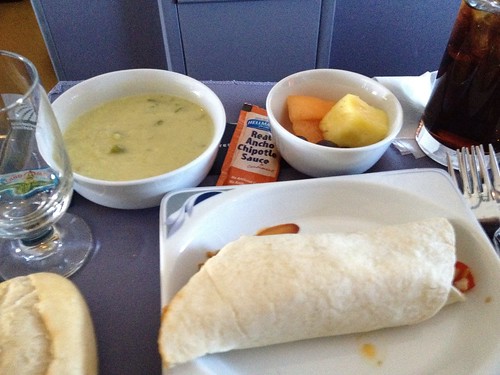
The first, the lunch, was served on a 9:30am flight out of IAH. It is a bit odd to eat lunch that early, but the reasoning behind serving lunch then is that the passengers coming off of east coast connections would receive breakfast twice on westbound flights. The meal consisted of a beef burrito, fruit, and asparagus soup. The burrito was just ok, but the soup was actually quite good.

New United First Class Lunch Service
Beef burrito, asparagus soup, and fruit

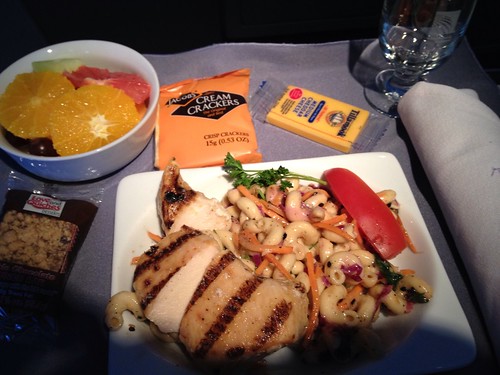
On the return flight a snack was served. The snack served before the merger was a literal “cold plate” of meats and cheeses. It was not very filling and was full of sodium. The new cold plate is a piece of grilled chicken, a cold pasta salad, and fruit. The pasta salad was extremely tasty for airplane food and the entire snack was very filling. Surprisingly, the chicken was moist and juicy and if the United caterers keep up such quality in the future I’ll be very impressed.

New United First Class "Cold" Plate
Grilled chicken, cold pasta salad, and fruit

While lunch was a little disappointing with the beef burrito, I think the new United is trying to improve the food options. My one suggestion to them would be to bring back the side salad on the lunch flights. If the options are a burrito and side salad or a large salad with shrimp and a side of fruit, I think flyers will be much more satisfied.

How Bloomberg BusinessWeek Designed the Continental/United Cover

The cover takes a look at the airlines from a chemistry standpoint. Overall, the article is pretty good and gives a look at the merger from a perspective we as consumers aren’t necessarily used to seeing.

The cover still throws me off a bit, but the story behind how they design covers at BusinessWeek is very interesting.

When asked about being edgy, here is what the designers said –

It’s funny because I don’t think we are [edgy]. Everyone takes covers, interprets covers in a slightly different way. When you’re privy to the process, it demystifies it a bit. When you’re part of the process it loses the surprise value. So, I don’t see this one as particularly surprising. I think it’s fun. But, yah, it’s nice that everyone thinks that.

I think it’s an edgy cover and pretty much unnecessary.

Travel Backpacks – A Follow-Up

In November I started looking for a new backpack for my camera, a few lenses, and a laptop. A few suggestions were made and I looked into all of them. My criteria was a backpack that was lightweight, allowed easy access to the camera, and carried a laptop. To start my search I tried finding a store locally that had the backpacks in stock to try them out. This turned out to be an exercise in futility as many places do not carry this specific style of backpack. I found plenty that simply carried a camera and accessories but that was it.

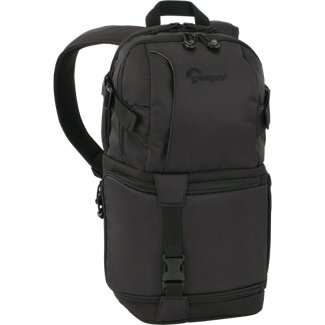
LowePro 150 AW

A bit frustrated, I ended up ordering two backpacks from Amazon, which were both on sale, and was going to return the one I did not like. The first, the LowePro DSLR Video Pack 150 AW, I took on our recent trip to Germany and Poland. It’s a sturdy backpack with a great pocket for the camera and lenses. It can only fit a 13″ laptop, but that’s what I own so it works. The larger 250 AW was just a little too big for my tastes and I am glad I went with the 150. When wanting to take a picture I simply swung the strap off of my right shoulder, brought the bag around my left side, unzipped the camera pocket, took a picture and returned the camera to its space.

The upper pocket held my iPhone charger, the camera charger, a small U.S.-Euro converter, my Moleskine, and a few pens and pencils. It may not sound like a lot of stuff but in my mind, it forces me to think about what I pack and try to dwindle the amount of extra stuff I am carrying.

One downside of the bag is the side pocket for the tri-pod. It is a soft mesh and the tri-pod moves a little as you walk. While I was walking around the crowded Christmas markets in Dresden I was worried that turning too quickly would lead to me taking someone out.

Overall though, if you’re looking for a compact camera/laptop bag, the LowePro 150 AW is great, as long as you can keep the amount of extra stuff you carry to a minimum.

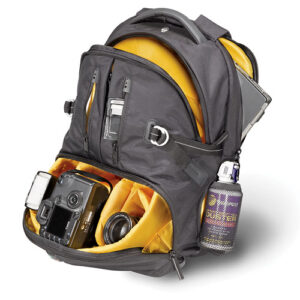
The other bag I tried out is the Kata DPS Digital Rucksack 467. It was recommended by a few of my friends and is a bit larger than the LowePro 150 but definitely not overwhelming. Now, I have not had a chance to use the backpack on trip but I like the amount of storage space it has and the fact that I could theoretically carry a single change of clothes as well as my camera and laptop.

Kata DPS 467

I ended up keeping both backpacks since the sales price of both added up to the price of one bag. I see them as serving different purposes. The LowePro is a fantastic bag for a short trip or those outings where you do not need to carry a lot of stuff, whereas the Kata fills the longer trip niche for me. If I am going to need to carry more than a few days worth of stuff and am trying to stick to a carry-on only, the Kata is the way I am going.

This next week will see me using the Kata for a long work trip and a short vacation that are back to back, making it necessary for me to carry a lot of stuff. I’ll be sure and update this post when I return with my thoughts on using the Kata bag during an actual trip.

2011 in Review – Travel Statistics

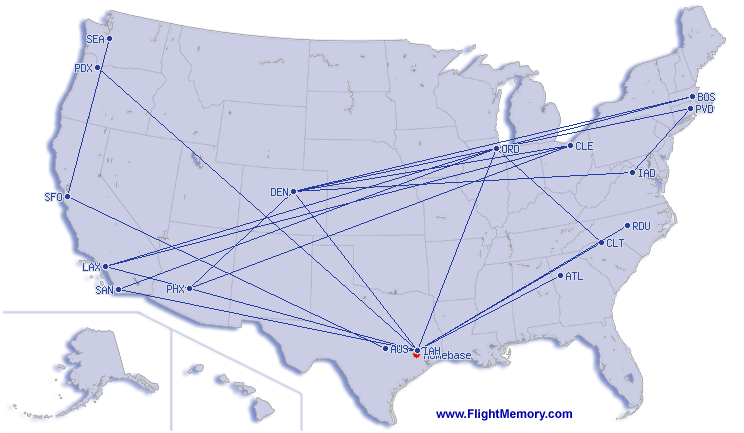
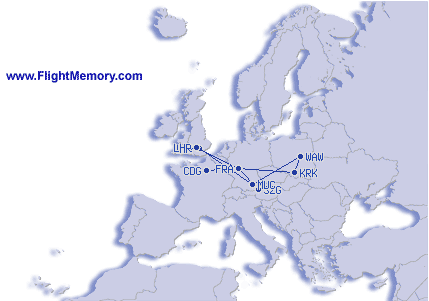
Rather than break down my year in cities I thought I would post my 2011 travel statistics. Right now I use FlightMemory to track my flights and it gives a decent breakdown of all of my travel.

In 2011 I flew 96,429 miles, spending 242 hours in the air. That required 70 domestic flights, 6 intercontinental flights, and 9 intra-European flights.

Those numbers mean I circled the Earth 3.87 times and made it about halfway to the moon.

My most frequented route was Houston to Atlanta, which I did 14 times.

My domestic flights:

My intercontinental flights:

My intra-European Flights:

It was a lot of flying in 2011. I am hoping some new and fun destinations are in store for me in 2012.

Happy New Year!